Skip to content
LPE Originals

Critiquing Legal Futurism and Imagining a Radical, Emancipatory Legal Liberalism

The exact trajectory predictive legal analytics will take in the coming years is really anyone’s guess, but we can be fairly sure that the discourse of cost cutting and increased rationality via technology will be coming for the legal system, piece by piece. As such, it is worthwhile for left legal theory to take legal futurism, and even the idea of a legal singularity, seriously. Doing so, even for critics of liberalism, requires revisiting the liberal principle of the rule of law.

LPE Originals

What the UK Student Rent Strikes Reveal about Financialization

The Bristol Rent Strike, which now has over 1900 students pledging to withhold rent, is one of the many ongoing student strikes across the UK. Over the past few months, students at roughly 20 universities including Manchester, Oxford, and Cambridge have organized mass rent strikes, demanding overall reductions in rent, no-penalty contract releases, and better accommodation conditions. But one significant obstacle stands in their way: Many of these students live in financialized student housing—in buildings owned not by universities but by multi-million-dollar corporations. The financialization of student housing has fundamentally altered the relationship between universities and students and, in so doing, has complicated student resistance against housing injustice.

LPE Originals

Privatized “Affordable Housing” Is A Scam

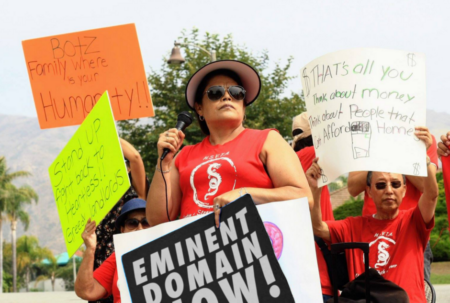
You hear it everywhere: we need more “affordable housing.” It’s a seemingly uncontroversial call, and yet… a group of members of the LA Tenants Union were compelled to document the many and profound problems with the dominant model of privatized “affordable housing” in the United States.

LPE Originals

Overrating Under-determination; Underrating Capitalism (A Reply to Karl Klare)

Klare speaks to the virtues of post- and non-marxist social theory. My impression is that these literatures are long on the kind of disaggregation that the theory of underdetermination permits. Marxist critical theory tends to place more emphasis on aggregating, finding patterns. That kind of thought and past socialists who held to only minimally appear in Klare’s text and do so largely as foils. I would like to suggest that marxist social theory and the identification of patterns that persist over time – such as structural domination – is at least equally valid for left purposes and for understanding the relationship between law and political economy.

LPE Originals

Not an “Achievement Gap”, a Racial Capitalist Chasm

Throughout this pandemic, transnational corporations and white parents alike have been sounding the “achievement gap” alarm under the guise of concern for “voiceless” Black and Brown children, but in service of their own neoliberal agendas. The students they speak of, however, can speak for themselves — and as they struggle through this time, with a fierce resilience that no young person should be forced to cultivate, their realities and their words call for more radical solutions.

LPE Originals

What Makes An Administrative Agency “Democratic”?

Scholarship thus far has not reconciled the relationship between democratized agency policymaking and the regular lawmaking done by Congress. To ameliorate the inexorable agency costs, theorists generally pose two different solutions: (1) a democratization of agency discretion, e.g., by making notice and comment procedures more robust; or (2) forcing Congress to elaborate their intent in fine-grained detail or undertake more robust oversight. Both moves inadvertently replicate a conceptual mistake committed by many anti-administrativists. This essay will rectify this mistake.

LPE Originals

Tax Havens: Legal Recoding of Colonial Plunder

The end of European empires during the mid-twentieth century and the independence of former colonies was many things: an oft-violent conflict between unequal opponents, a clash of ideas and ideologies, a struggle over rights and self-determination. Less frequently considered is that decolonization involved a dramatic movement of money and a legal reorganization of access to assets and investments. Having tracked these movements, I have found a surprising connection between decolonization and the expansion of tax havens and tax haven business during the 1950s and 1960s.

LPE Originals

On Socialism and Critical Legal Theory

A recent workshop on the “Jurisprudence of Distribution” invited the opening panelists each to provide a five-minute overview of what a contemporary approach within left legal theory might offer. Other speakers covered Critical Race Theory, Feminism, Vulnerability Theory, left political economy, and so on. I took socialism and critical legal theory. Here are my five minutes (with some slight modifications for bloggability).

LPE Originals

On Justice Ginsburg and the Political Economy of the Family

The argument that gender stereotypes structured law, and therefore shaped social identities and practices, is relatively familiar to historians and legal scholars. Less widely discussed is how gender ideologies influenced the development in the United States of what sociologist Gøsta Esping-Andersen termed a liberal welfare state. How did Ruth Bader Ginsburg’s vision of feminism fit in with other movements at the time?

LPE Originals

Planting an Orchard

Through a progressive approach to designing policy feedback loops with communities and their organizations, we can create and win policies that both meet the immediate material needs and redistribute political and economic power more equitably.

LPE Originals

Toward a Democratic Political Economy for the First Amendment

The key to understanding the connection between rights and material conditions is a conception of democracy…. people who are suffering from certain basic forms of deprivation and disadvantage will find it impossible to exercise fundamental rights and they will be unable to participate meaningfully in the project of cooperative government. Liberties may become impossible to realize without sufficient primary goods, while membership status within the political community may be degraded by structural inequality of economic wherewithal. Such problems can be avoided, at least partially, if freedom of speech and religion are construed in ways that are sensitive to the material conditions for their meaningful exercise. Otherwise, the conditions for the cooperative project of self-government will be absent.