Skip to content
LPE Originals

The Capital Commons, Part 2: How Best to Manage Public Capital

In Part 1 of this two-part post, I explained that, owing to its endogeneity and consequent vulnerability to what I call Recursive Collective Action Predicaments, monetized public capital must, if it is to be productively rather than merely speculatively deployed, be publicly managed, while privately intermediated capital may be privately managed.I then suggested that public…


LPE Originals

The Algorithmic Capture of Employment and the Tertius Bifrons

Automated hiring systems are paradoxical. Although often the stated reason for adopting them is to curtail human bias, they frequently end up exacerbating the biases they’re meant to correct. Even as employment discrimination continues to morph with the introduction of new technologies, so, too, should the law change to meet it head to head.

LPE Originals

Coordination Rights Beyond Nation States

Conversations about progressive possibilities for economic policy and political economy often undertheorize or ignore international trade. The international economy is often seen as a free-for-all between countries, a space where powerful multinational firms are able to play governments off one another, resulting in a race to the bottom of domestic laws and regulations. Or, it is seen in terms of competition between economies with coherent rules, laws, and industries in the domestic sphere, but where Ricardian comparative advantage wins out internationally. Competition in international markets is seen as a flat state of nature, a “real” free market. By convincing ourselves that international trade and competition exists in a void–or accepting the assumption that it does–we ignore how law, policy, and regulation reshape the economy and commercial relationships to favor certain groups at the expense of others.

LPE Originals

A Tribute to David Graeber

The importance of Graeber’s work goes well beyond money and debt. In my view, anybody interested in building up a renewed legal realism that can stand up to not just law-and-economics but also the updated formalism of liberal analytic moral/legal theory would be well served to familiarize themselves with his writings.

LPE Originals

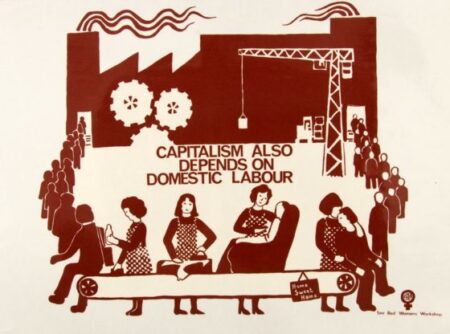
A Nightmare of Work and Care

At least since welfare reform, then, we have coexisted with a particularly monstrous work-life imbalance for low-income parents in which economic security, much less economic mobility for their children, remains forever out of reach. Americans have learned to live with punitive workfare as their only form of safety net assistance (or without it, as is the case for too many poor people ineligible even for subsistence benefits). Far from removing the crisis in care and work from polarized public debate, however, the pandemic has shown all too clearly that workfare ideology will not remain confined to the ever-shrinking welfare context, but has a life of its own.

LPE Originals

Spread the Fed, Part II

From Federal Disintegration through Community QE to Central Bank Decentralization In the post immediately preceding this one, I observed that the twinned histories of American ambivalence toward centralized political governance on the one hand and central banking on the other place recent development in the realms of both pandemic response and American public finance into…

LPE Originals

Spread the Fed, Part I

Central banking and finance in the US have a curiously ‘dialectical’ history – a history mirroring, in interesting ways, that of our federal union itself. Both histories reflect ambivalence about, and hence oscillation both toward and away from, collective agency and its political manifestation in centralized governance. Tracing these parallel trajectories can shed helpful light upon certain features of American monetary history, finance-regulatory tendencies, and of course public finance.

LPE Originals

Policing as Unequal Protection

Black Americans have endured police violence since the nation’s founding. The origins of American policing have been traced to slave patrols. Today, Blacks are more likely than whites to encounter police, to be stopped by police, and to be fatally wounded by police. In recognition of this history and ongoing experience of violence, the Movement for Black Lives (“M4BL”) has called for the defunding of the police; community control of policing; and the development of nonpunitive, noncarceral institutions for resolving social conflict, among other transformative changes.

LPE Originals

Carceral Feminism at a Crossroad

In this watershed moment when policymakers feel liberated to embrace noncarceral responses to the behaviors that laws label crimes, one question rings out: “What about rape and domestic violence?” The pro-policing contingent intends this as a rhetorical “gotcha.” But many progressives open to meaningful reform genuinely worry about the demise of gender crime law, which they see as a formidable legal tool against the patriarchy.

LPE Originals

Rent Cancellation: Social Protection in Uncertain Times

With the onset of the coronavirus pandemic, interlocking structural inequities in health, employment, and racial justice have buffeted vulnerable populations. The looming “eviction apocalypse” sits at the nexus of these three ills. Black and Latinx people have the highest COVID infection, death, and unemployment rates nationwide. Mass evictions would only worsen this situation, preventing these households from sheltering in…

LPE Originals

Where Is the Care in the CARES Act?

Two pandemic policy stories have been coming to a head: (1) the push for another relief bill as a key CARES Act unemployment insurance benefit expires on July 31, and (2) the ongoing national child-care crisis as school closures for the fall are announced amidst the virus’ resurgence. What connects them is kids’ needs for care and families’ needs for economic support when they—predominantly mothers, of course—perform that caring labor. A little-noticed feature of the CARES Act supports care for children who must stay home due to school closures.

LPE Originals

Situating the Role of Democracy in LPE

One of LPE’s foundational commitments, as Sanjukta Paul reminds us, is that law constitutes markets – and that, as a result, we are free to constitute them differently. But this simply begs the question: how ought we constitute them? This is where political theory can be useful. As Sam Bagg points out, many LPE scholars already understand that democracy must have something…

LPE Originals

The “New Normal” Privatization of the Workplace

As the COVID-19 crisis rages on, individuals around the world are now thrown into a work-from-home, digitally-enabled “new normal” of the workplace. For most white-collar workers, homes have become offices, and boundaries between work and domestic life are being reshuffled. This shift, however, is just an acceleration of prior developments well under way since the beginning…

LPE Originals

Last Week’s Surprisingly Deep Victory for LGBT Workers

This post was originally published at Jacobin. Last Monday, the Supreme Court ruled that employment discrimination on the basis of sexual orientation or gender identity is prohibited by Title VII of the Civil Rights Act of 1964. The decision brings employment law in line with public opinion: a majority of Americans favor employment protections for LGBT…